Skilled Worker Change: Recognised Modern-Slavery Victims Will Be Allowed to Work for Any Employer
From 8 October 2026, eligible Skilled Workers recognised as modern-slavery victims can work for any employer. Learn who qualifies and how the new UK rule works.
Auntie Tobi
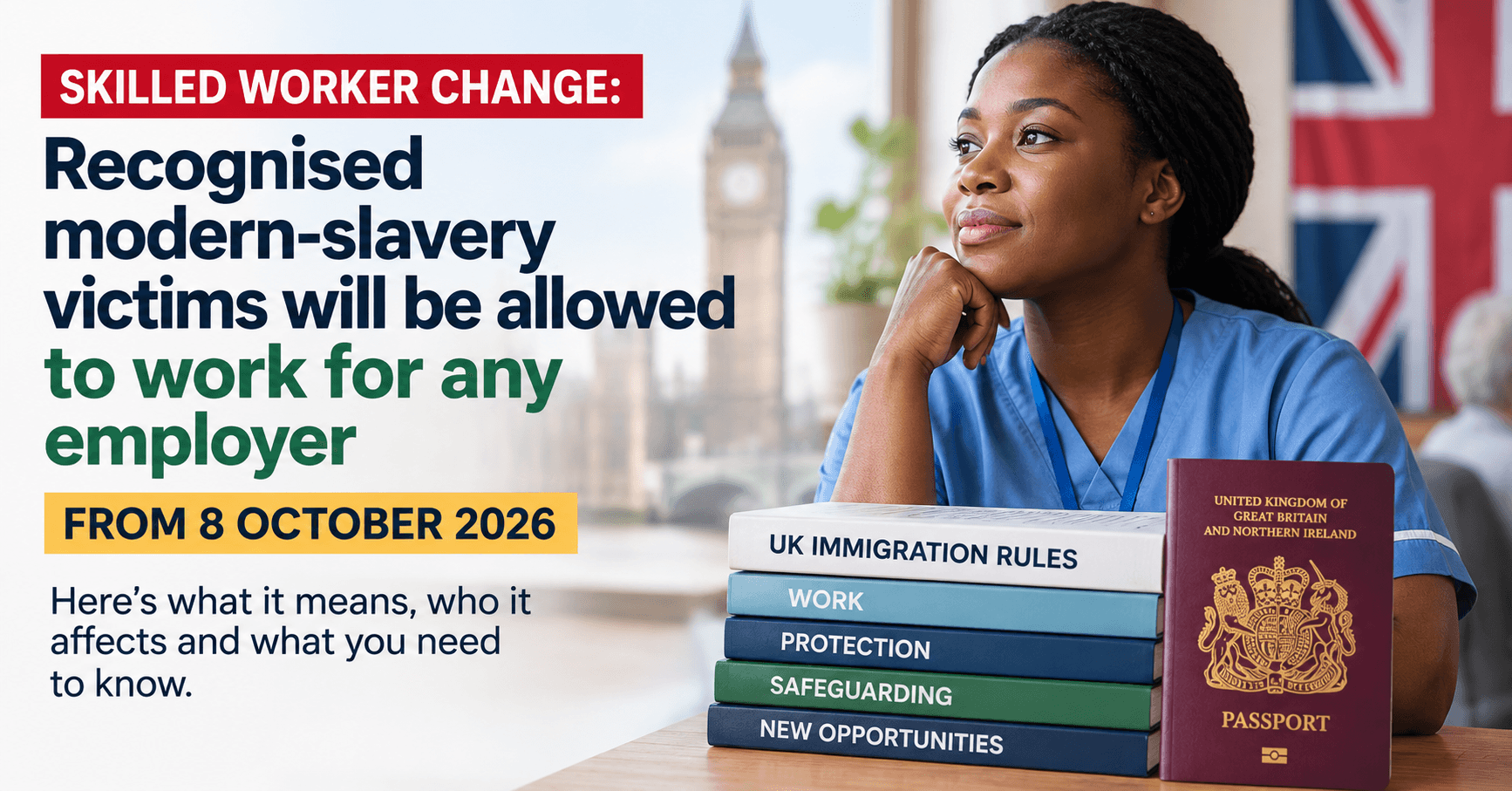
This is an important immigration change, particularly because we've already seen the headline being simplified online into something much broader than the actual rule.
So abeg, before anybody reads “care workers can now leave their sponsor and work anywhere”, that is not what the new Immigration Rules say.
The Home Office published changes to the UK's Immigration Rules on 3 September 2026. One of those changes introduces additional protection for certain Skilled Worker visa holders who have been formally recognised as victims of modern slavery.
It takes effect on 8 October 2026.
What is changing?
Normally, the Skilled Worker route is based on working in a specific sponsored job.
The Home Office explains that Skilled Workers generally cannot simply take up other work instead of the job they were originally sponsored to do.
But from 8 October, an important exception will apply to certain recognised victims of modern slavery.
Under the new rule, an eligible Skilled Worker may have their work conditions amended so that they can undertake any work, including:
Employment with another employer, self-employment and voluntary work.
There is an exception: they cannot work as a professional sportsperson, including as a sports coach.
Who actually qualifies?
This is the part everyone needs to understand.
This change does not automatically apply simply because someone believes their employer is exploiting or mistreating them.
The new Immigration Rule specifically applies where a Skilled Worker:
has been referred into the National Referral Mechanism (NRM);
has received a positive Conclusive Grounds decision; and
that decision was made during their most recent period of immigration permission.
A Conclusive Grounds decision is therefore much more specific than simply making a complaint about an employer.
Why is this change important?
The Home Office says the purpose is to protect victims and prevent people from using the sponsorship system to exploit vulnerable workers.
Its explanatory memorandum says lifting the employment restriction is intended to encourage victims to come forward earlier and guard against employers who try to “weaponise the sponsorship system” to exploit workers.
That's significant because sponsorship can create a difficult situation for a migrant worker experiencing serious exploitation.
Someone may want to leave an abusive employment situation but also be worried about what leaving could mean for their immigration status and ability to work.
For people who meet the new modern-slavery criteria, this change removes an important employment restriction.
What about care workers?
This change is not specifically a care-worker rule.
It is a change to the Skilled Worker route.
However, it may be particularly relevant to some internationally recruited workers in social care because the government has previously acknowledged reports of unethical and exploitative recruitment and employment practices affecting some international recruits in the care sector.
But this distinction matters:
❌ It does NOT mean:
“From 8 October, any sponsored care worker who doesn't like their employer can leave and work anywhere.”
That's incorrect.
✅ What it DOES mean:
An eligible Skilled Worker who has gone through the NRM process and received the required positive Conclusive Grounds decision can have their work restrictions changed so that they can work more freely for the remainder of their existing immigration permission.
Does this give someone a new visa?
Another important distinction: the Home Office describes this as allowing eligible victims to work for any employer for the remaining duration of their existing permission.
So don't interpret the announcement as an automatic new visa, permanent immigration status or indefinite right to work.
It changes the work restrictions attached to the person's existing Skilled Worker permission when the required conditions are met.
When does the change start?
8 October 2026.
The Statement of Changes specifically lists the relevant Skilled Worker amendments, APP SW1 and APP SW2, among the provisions taking effect on that date.
So as of today, 6 September 2026, this change has been announced and published in the Immigration Rules, but it is not yet in force.
That distinction is important.
💚 Auntie Tobi Says
This is a positive protection, but please don't let a viral headline give you the wrong immigration advice.
“Exploited care workers can now leave their sponsor and work anywhere” is far too broad.
The actual rule is narrower.
From 8 October 2026, certain Skilled Workers who have been referred into the National Referral Mechanism and received a positive Conclusive Grounds decision will be able to have their work restrictions amended, allowing them to work for any employer for the remainder of their existing permission.
If you're experiencing serious exploitation, trafficking or modern slavery, don't assume you have to remain silent because of your visa.
But equally, don't resign from sponsored employment based solely on a social-media post saying the sponsorship rules have changed for everyone.
Your individual immigration circumstances matter.
Official sources
Home Office — Statement of Changes to the Immigration Rules, 3 September 2026
Home Office — Explanatory Memorandum to HC 584
Last fact-checked: 6 September 2026.
This article provides general information and is not individual immigration or legal advice.


Comments(0)